Getting your head around Xero VAT codes for expenses

This process involves filing a VAT refund claim with your local tax authority, and the rules and procedures can vary from country to country. On the other hand, VAT-exempt supplies do not enable VAT reclaims, which can result in additional irrecoverable costs for businesses. This distinction is crucial for businesses to comprehend when dealing with VAT reclaims and determining their overall tax liabilities. The supplier does not charge VAT but as the customer you account for it as both a sale and a purchase on your VAT return. (The exception is if you’re partially exempt business for VAT purposes – speak to your accountant).

  • It doesn’t mean there is ‘no VAT’ and it certainly doesn’t mean you should use the No VAT tax rate in Xero for them all.
  • 20.0% RC (0%) – This is to be utilised for reverse charge expenses at a rate of 20.0& RC (0%).
  • These tax codes are used for standard rated goods and services, such as repairs and maintenance, telephone, rent.
  • VAT is not charged if goods are exported outside the EU provided you keep evidence of the export.
  • This is not an exhaustive list which can be found in the HMRC rates of vat on different goods and services.

GDPR and online accounting + Small Businesses

Staying informed and seeking professional advice if needed is crucial to ensure compliance. By consulting with professionals, businesses can confidently navigate specific VAT systems and ensure accurate VAT treatment for their goods and services. By doing so, businesses can ensure that they are applying the correct VAT treatment to their goods and services, preventing potential compliance issues and financial penalties. Determining whether items are zero-rated or exempt from VAT is a crucial aspect of VAT compliance. To classify items accurately, consulting with VAT specialists or reviewing the relevant legislation is advisable. In this section, we’ll provide guidance on identifying eligible items and seeking expert advice to ensure accurate VAT treatment and compliance with specific VAT rules.

Can you reclaim VAT on zero-rated supplies?

Salaries, savings to pension schemes and such like are outside the scope of VAT legislation. Non Vatable items do not appear anywhere on your VAT return, however, xero no vat or zero rated the MTD system should record that the transactions have been made and that VAT has not been accounted for. The majority of supplies are subject to the Standard 20% VAT rate, although in rare cases, the Reduced VAT rate of 5% is applied to the delivery of energy (and for certain food sales). If your business incurs more input VAT (VAT on purchases) than you charge in output VAT (VAT on sales), you may be eligible for a VAT refund.

Comparing zero-rated and VAT-exempt supplies

I won’t go into detail about zero-rated VAT or exempt VAT in this article. If you wish to find out more on this subject, you can read this guide on the differences. Anything that does not fall into the above should have VAT charged at 20%. VAT is not charged if goods are exported outside the EU provided you keep evidence of the export.

Outside the Scope of VAT

While these mechanisms serve different purposes, they both aim to ensure that essential goods and services are more accessible and affordable. However, the distinctions in VAT recovery and tax rates can have significant implications for businesses, so it’s essential to correctly categorize supplies to comply with VAT regulations effectively. Conversely, exempt supplies do not enable businesses to reclaim VAT, which can lead to higher costs for both businesses and consumers. It’s crucial for businesses to accurately classify their goods and services to ensure they are applying the correct VAT treatment. If your business is VAT registered then it is vital that you charge the correct rate of VAT to your customer to ensure that you file the relevant information with HMRC. There are different rules based on whether you are selling goods or services, selling to businesses or individuals and selling to the UK, EU or the rest of the world.

You should use this rate if a supplier is not VAT registered and the supply would otherwise be liable to VAT. Reverse-Charge Expenses (20%) – some service providers are located outside of the UK. Many of these services are provided by companies who do not register for VAT in the UK and hence do not charge VAT. Instead, as a consumer, you must follow the reverse charge guidelines. 20.0% S (20%) and 5.0% R (5%) – the Standard and Reduced VAT rates in the UK are 20.0% S (20%) and 5.0% R (5%).

  • Not on EC Sales List.Sale of Services to Non EU business – No VAT.
  • This applies to goods and services like domestic fuel and heating.
  • An example might be that you enter expenses or petty cash via journal and there is VAT to reclaim.
  • Sales to non VAT registered consumers are treated like a sale to a UK customer with 20% VAT added to the net amount as normal.

To summarise for outside-the-scope transactions VAT doesn’t apply at all to these goods or services sold so you do not add VAT to your sales price and no VAT can be reclaimed on the purchase. One of the biggest misconceptions when completing the bookkeeping for your small business is £0 VAT equals ‘No VAT’ in Xero. When using Xero as your bookkeeping software you could be enticed to use the No VAT tax rate for all transactions that have no VAT. The reduced rate of 5% is used for some items including domestic fuel and some environmental supplies used in the construction industry. Over the last few years, I have seen VAT incorrectly recorded for a variety of reasons. Mistakes happen and are easily corrected but it is clear that some of our clients and bookkeepers they have used in the past don’t understand how to record VAT correctly.

Purchases that you do not have a VAT receipt for are recorded as Zero Rated. These still appear in the VAT totals, but you cannot reclaim the VAT that you may (or may not) have paid on these. You record them as Zero Rated irrespective of who the supplier is and irrespective of whether the supplier is VAT registered or not. Sales and Purchases of exempt items still appear in the totals figures on the VAT return, however no VAT is collected or paid on these items. Exempt items include bank fees, insurance, postage stamps amongst other things. Goods that are supplied from the UK fall under the UK VAT rules where the seller is based.Services are assumed to be provided where the customer is based and so fall under the VAT rules in that country.

Common exempt business expenses include postage, insurance and some professional membership subscriptions. There are three different occasions where there may not be VAT charged on goods or services that carry different rates of VAT. It doesn’t mean there is ‘no VAT’ and it certainly doesn’t mean you should use the No VAT tax rate in Xero for them all. If you are using a journal to post a transaction into Xero, then yes it would be correct to apply the correct VAT tax rate. An example might be that you enter expenses or petty cash via journal and there is VAT to reclaim. Goods that are sold to a VAT registered business in the EU can be zero rated (Zero Rated EC Goods Income in Xero).

The seller will not charge their customers any VAT, but they also won’t be able to reclaim any VAT paid on costs related to these goods or services. As a result, zero-rated VAT can be a valuable benefit for businesses, especially those operating in industries heavily reliant on inputs subject to VAT, such as manufacturing or construction. It can improve their cash flow and competitiveness by reducing their tax costs and ultimately enabling them to offer more competitive prices to consumers.

Transfers between bank accounts, tax payments to HMRC, and director/shareholder by drawings/dividends are all examples. 20.0% RC (0%) – This is to be utilised for reverse charge expenses at a rate of 20.0& RC (0%). No VAT (0%) – these transactions will not display on your VAT returns because there is no VAT (0%).

Pensions and inheritance tax

If you would like to report on something other than a VAT period or perhaps just a certain type of transaction you will need to try a different route. This is where the Account Transactions report will help you find No VAT transactions in Xero. This is a process you would expect all good bookkeeper and accountants to do as part of the VAT return submission.

The majority of supplies are subject to energy (and for certain food sales). Use the right rate when making a VAT-able supply or incurring an expense with a VAT component. VAT codes and rates are handled differently by different accounting software products. This simple guide should help you figure out which rate to use in which situation.

Shareholders’ Equity What Is It, Statement, Calculation Example

Total liabilities are obtained by adding current liabilities and long-term liabilities. Shareholders’ equity can also be calculated by taking the company’s total assets less the total liabilities. The account demonstrates what the company did with its capital investments and profits earned during the period. Share Capital (contributed capital) refers to amounts received by the reporting company from transactions with shareholders. Common shares represent residual ownership in a company and in the event of liquidation or dividend payments, common shares can only receive payments after preferred shareholders have been paid first.

You should consider our materials to be an introduction to selected accounting and bookkeeping topics (with complexities likely omitted). We focus on financial statement reporting and do not discuss how that differs from income tax reporting. Therefore, you should always consult with accounting and tax professionals for assistance with your specific circumstances. Corporations are able to offer a variety of features in their preferred stock, with the goal of making the stock more attractive to potential investors. All of the characteristics of each preferred stock issue are contained in a document called an indenture.

The Formula

Where the difference between the shares issued and the shares outstanding is equal to the number of treasury shares. Finally, the number of shares outstanding refers to shares that are owned only by outside investors, while shares owned by the issuing corporation are called treasury shares. Therefore, debt holders are not very interested in the value of equity beyond the general amount of equity to determine overall solvency. Shareholders, however, are concerned with both liabilities and equity accounts because stockholders equity can only be paid after bondholders have been paid.

  • For example, assume that a corporation has 100,000 shares of $0.50 par value common stock before a 2-for-1 stock split.
  • You’d need to be able to read a balance sheet to find the company’s total assets and liabilities in order to make these calculations.
  • “Here are three reasons why a Statement Of Shareholder Equity is a valuable tool for gauging the health of a business,” says Steinhoff.
  • In terms of payment and liquidation order, bondholders are ahead of preferred shareholders, who in turn are ahead of common shareholders.
  • A corporation’s balance sheet reports its assets, liabilities, and stockholders’ equity.
  • Shareholders Equity is the difference between a company’s assets and liabilities, and represents the remaining value if all assets were liquidated and outstanding debt obligations were settled.

Negative stockholders’ equity in that situation may be further compounded by negative cash flow. At a glance, stockholders’ equity can give you an idea of how well a company is doing financially and how likely it is to be able to pay its debts. That, in turn, can help you to decide if a company is worth investing in, based on your goals and risk tolerance.

Stockholders’ Equity Example

The number of shares authorized is the number of shares that the corporation is allowed to issue according to the company’s articles of incorporation. The number of shares issued refers to the number of shares issued by the corporation and can be owned by either external investors or by the corporation itself. Dividend recapitalization—if a company’s shareholders’ equity remains negative and continues to trend downward, it is a sign that the company could soon face insolvency. On the other hand, if a company is significantly overextended with loans and other debts that’s a sign that it may be in trouble.

Shareholders Equity

It is obtained by taking the net income of the business divided by the shareholders’ equity. Net income is the total revenue minus expenses and taxes that a company generates during a specific period. The formula to calculate shareholders equity is equal to the difference between total assets and total liabilities. If shareholders’ equity is positive, that stockholders equity examples indicates the company has enough assets to cover its liabilities. But if it’s negative, that means its debt and debt-like obligations outnumber its assets. A balance sheet can’t predict changes in the value of a company’s assets or changes to its liabilities that haven’t occurred yet.

Shareholders’ equity can help to compare the total amount invested in the company versus the returns generated by the company during a specific period. The “Treasury Stock” line item refers to shares previously issued by the company that were later repurchased in the open market or directly from shareholders. Next, the “Retained Earnings” are the accumulated net profits (i.e. the “bottom line”) that the company holds onto as opposed to paying dividends to shareholders. During a liquidation process, the value of physical assets is reduced and there are other extraordinary conditions that make the two numbers incompatible.

What is a Statement Of Shareholder Equity?

However, low or negative stockholders’ equity is not always an indication of financial distress. Shareholder equity comprises original paid-up capital, preferred/common shares, and earnings retained after paying dividends and share buybacks. The owner’s equity reflects a company’s economic stability and provides information about its financial performance.

  • It will contain the date, the account name and amount to be debited, and the account name and amount to be credited.
  • After the 25 shares of treasury stock are sold, the balance in Treasury Stock becomes a debit of $900 (45 shares at their cost of $20 per share).
  • Next, the “Retained Earnings” are the accumulated net profits (i.e. the “bottom line”) that the company holds onto as opposed to paying dividends to shareholders.
  • Total liabilities are obtained by adding current liabilities and long-term liabilities.
  • Bonds are contractual liabilities where annual payments are guaranteed unless the issuer defaults, while dividend payments from owning shares are discretionary and not fixed.

Earnings Available for Common Stock

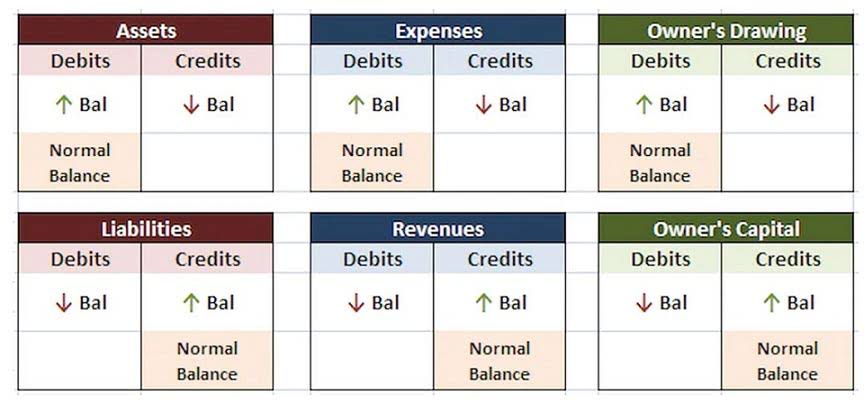
The equity value is a critical metric to understand a company’s or firm’s financial position on any reporting date. Positive equity with an increasing trend is always a good sign for any company. In contrast, a declining trend in equity value is indicative of weak management, and it could be a signal that the company is nearing insolvency. The accounting term that means an entry will be made on the left side of an account. Sales are reported in the accounting period in which title to the merchandise was transferred from the seller to the buyer.

However, if a state law requires a par (or stated) value, the accountant is required to record the par (or stated) value of the common stock in the account Common Stock. The officers of a corporation are appointed by the corporation’s board of directors to carry out (or execute) the policies established by the board of directors. The officers include the president, chief executive officer (CEO), chief operating officer (COO), chief financial officer (CFO), vice presidents, treasurer, secretary, and controller.

There are 10,000 authorized shares, of which 2,000 shares had been issued for $50,000. At the balance sheet date, the corporation had cumulative net income after income taxes of $40,000 and had paid cumulative dividends of $12,000, resulting in retained earnings of $28,000. If negative, the company’s liabilities exceed its assets; if prolonged, this is considered balance sheet insolvency. Typically, investors view companies with negative shareholder equity as risky or unsafe investments. Shareholder equity alone is not a definitive indicator of a company’s financial health; used in conjunction with other tools and metrics, the investor can accurately analyze the health of an organization.

If the dividend percentage on the preferred stock is close to the rate demanded by the financial markets, the preferred stock will sell at a price that is close to its par value. In other words, a 9% preferred stock with a par value of $50 being issued or traded in a market demanding 9% would sell for $50. Cash dividends (usually referred to as dividends) are a distribution of the corporation’s net income. Dividends are analogous to draws/withdrawals by the owner of a sole proprietorship.

For non-public corporations, the Statement Of Shareholder Equity is frequently referred to as the owner’s equity. A Statement Of Shareholder Equity helps you determine how successfully the business owner is conducting it. If Stockholder Equity falls from one accounting period to the next, it is an indication that the business owner is doing something incorrectly. It is useful for planning purposes to know how much the business is worth once expenses are deducted.

As a result, they decide that their articles of incorporation should authorize 100,000 shares of common stock, even though only 1,000 shares will be issued at the time that the corporation is formed. A corporation’s accounting records are involved in stock transactions only when the corporation is the issuer, seller, or buyer of its own stock. The corporation will go about its routine business operations without even noticing that there were some changes among its stockholders. A few more terms are important in accounting for share-related transactions.

What is Last in, First out LIFO? A Complete Guide

LIFO assumes, when calculating what does full cycle accounts payable mean cost of goods sold (COGS), that the inventory your business has acquired most recently is the first to be sold. When it comes to inventory management, there’s more to an optimized strategy than simply determining how inventory will be tracked. In fact, businesses also need to select an accounting method to track the cost of goods sold (COGS) for their inventory. If you are running a business, you are looking for all the tax breaks that you can get. If operating within the United States, there is an inventory accounting method called LIFO that can help ease your company’s tax burden.

Streamlines order fulfillment, automates stock tracking, and ensures efficient delivery management, helping businesses optimize logistics and improve customer satisfaction. Optimize inventory, streamline production workflows, and reduce errors with real-time data and mobile solutions, enhancing efficiency and boosting profitability. LIFO proves most beneficial in environments with consistently rising prices and fast-moving inventory.

Inventory profit occurs when replacement cost of inventory is more than the inventory cost matched against revenues. This inventory profit understates cost of goods sold (COGS) and overstates profit. Under LIFO, a business assumes that the last inventory purchased is the first to be sold. In this case, the business is assumed to have sold the last unit purchased for $32, so the amount the business can deduct against taxable income is $32. Plus, barcode and QR code scanning features make perpetual inventory management that nonprofit kit for dummies cheat sheet much easier.

  • To avoid this problem, a company may purchase goods in large quantities with the intention to match them against revenues.
  • In industries where products quickly become outdated, using LIFO can lead to issues with inventory obsolescence.
  • With LIFO, the most recent costs are assumed to be the first ones expensed for cost of goods sold (COGS), meaning older inventory remains in the inventory balance sheet until prices decrease.
  • Under inflationary economics, this translates to LIFO using more expensive goods first and FIFO using the least expensive goods first.
  • Due to understatement of inventory, the working capital position may look worse than it really is.

However, in the real world, prices tend to rise over the long term, which means that the choice of accounting method can affect the inventory valuation and profitability for the period. However, this approach can also lead to lower net income and reduced reported profits, which may be a disadvantage when presenting financial statements to investors or lenders. The LIFO reserve account, which is adjusted annually, tracks the difference between LIFO and other inventory methods, such as FIFO. As inventory costs rise, the LIFO reserve typically increases, reflecting the growing gap between the LIFO inventory value and what it would be under the FIFO method.

LIFO vs. FIFO: Financial Reporting

When inventory balance consists of units with a different value, it is important to show those separately in the order of their purchase. Doing so will ensure that the earliest inventory appears on top, and the latest units acquired are shown at the bottom of the list. For example, only five units are sold on the first day, which is less than the ten units purchased that day. Many countries, such as Canada, India and Russia are required to follow the rules set down by the IFRS (International Financial Reporting Standards) Foundation. The LIFO method assumes that Brad is selling off his most recent inventory first.

  • Put differently, LIFO treats the newest inventory items as the first ones sold, so the costs of the latest purchases are the first to be expensed.
  • Once the value of ending inventory is found, the calculation of cost of sales and gross profit is pretty straight forward.
  • Using the LIFO method can significantly influence a company’s balance sheet, particularly in how inventory costs and values are reported.

This reserve is recorded as a contra-asset account on the balance sheet and is directly linked to the inventory account. Using the Last in, First Out (LIFO) method can have significant impacts on net income and taxes. While LIFO typically lowers net income when prices are rising due to a higher cost base for inventory, it is tax advantageous because it reduces taxable income.

FIFO and LIFO accounting

The choice of inventory valuation method can have a significant impact on net income, taxes, and financial reporting. In this section, we will compare LIFO, FIFO, and average cost method to help readers gain a deeper understanding of these techniques and the advantages/disadvantages they offer in various price scenarios. The reason why companies use LIFO is the assumption that the cost of inventory increases over time, which is a reasonable assumption in times of inflating prices. By shifting high-cost inventory into the cost of goods sold, a company can reduce its reported level of profitability, and thereby defer its recognition of income taxes. The Last In, First Out (LIFO) inventory method carries significant tax implications that can influence a company’s financial strategy. One of the primary reasons businesses opt for LIFO is its potential to reduce taxable income during periods of inflation.

Similarly, in LIFO, the most recently acquired inventory items are considered to be the first ones sold or used. This difference can cause confusion between inventory tracking and inventory valuation, since reported costs do not always match actual stock flow. This article covers the LIFO method in detail, compares it with other inventory valuation methods, and explores how businesses apply it in practice. Using LIFO, the most recent unit ($300) is assumed to be the first one sold, followed by seven units at $200 each. The total cost of goods sold under LIFO amounts to $2,500 ($300 + 7 x $200), and net income becomes $1,500. When the inventory units sold during a day are less than the units purchased on the same day, we will need to assign cost based on the previous day’s inventory balance.

Calculating LIFO in Practice

Moreover, the prohibition of LIFO under IFRS can impact a company’s global tax strategy. Multinational corporations must navigate the complexities of aligning their inventory accounting methods with the tax regulations of each country in which they operate. GAAP (Generally Accepted Accounting Principles) compliance and another for IFRS compliance. The need for such dual reporting can increase operational costs and complicate financial analysis, as companies must reconcile the differences between the two sets of financial statements.

Part II does this, so there’s no reason to suspect HBO’s live-action retelling won’t take a similar storytelling approach. That being, showing Abby’s side of the Seattle-based story, which runs parallel to Ellie and Dina’s, before season 2 episode 7’s shocking penultimate scene brings them together. It’ll be Abby-centric, with its opening chapters likely showing us what Abby was up to before Ellie and Dina arrive in Seattle, and then where Abby is during this three-day period. For those who haven’t played The Last of Us Part II, Abby is not only the deuteragonist of that story, but also a player-controlled character for around half of the game’s total playtime.

The Financial Modeling Certification

This form must be attached to the company’s federal income tax return for the first tax year in which LIFO is used for any inventory items. The choice of LIFO method depends on several factors, including the nature of the inventory, the size of the business, and the level of detail in inventory tracking systems. Manufacturers and retailers with the capability to track individual inventory items may benefit from the Internal LIFO Calculation Method. The Last In, First Out method offers several benefits that make it an attractive choice for businesses managing non-perishable inventory. In logistics and inventory management, understanding how goods are stored and retrieved is crucial for efficiency and profitability.

LIFO, Inflation, and Net Income

When it comes to adherence to accounting standards, companies utilizing LIFO must ensure they comply with GAAP regulations. Firms need to maintain proper documentation and follow specific procedures in order to accurately record inventory costs using this method. This level of compliance can add complexity and cost for these organizations, which shareholders and analysts should be aware of. From a tax perspective, LIFO is advantageous during periods of rising prices as it results in lower net income and taxes since COGS will be higher.

No, using LIFO is not mandatory for U.S. companies; they have the freedom to choose any inventory cost flow method that suits their business operations and financial goals best. However, if a company elects to use LIFO for tax purposes, it must also adopt the same method for financial reporting to shareholders, resulting in lower net income and earnings per share. Industries that frequently use LIFO include retailers and auto dealerships, which typically have large inventories. The tax savings from using double declining balance method ddb formula + calculator this method can be significant and contribute to higher cash flows in certain market conditions. However, it’s essential for investors and analysts to consider the potential impact on financial reporting when evaluating companies that use LIFO.

General journal explanation, process, format, example

As Blur Guitar, Inc. buys inventory and makes sales throughout the year, it records all of the transactions as journal entries in the general journal. At the end of the year or the end of a reporting period, these transactions are taken from the general journal and posted to individual ledgers. Since there are so many different types of business transactions, accountants usually categorize them and record them in separate journal to help keep track of business events. For instance, cash was used to purchase this vehicle, so this transaction would most likely be recorded in the cash disbursements journal. There are numerous other journals like the sales journal, purchases journal, and accounts receivable journal. After the business event is identified and analyzed, it can be recorded.

In the case of payroll expenses, the wages expense, these accounts are debited, and the cash account is credited. Finally, you close the income summary account by moving the balance to retained earnings. Using the previous examples, our income summary balance would be $6,000. This means we’d have to debit $6,000 to the income summary account and credit an equivalent amount to retained earnings.

We discussed the use of journals in recording the Company’s transactions and its use in general journal accounting. An individual trader or a professional fund manager can form a journal where he records the details of the trades made during the day. These records can be used for taxation, audit, and evaluation purposes. After making entries in the general journal format in accounting, all the transactions are summarized and posted in the ledger. We take monthly bookkeeping off your plate and deliver you your financial statements by the 15th or 20th of each month.

What Is Auditing? Definition, Types & Importance

In this case, the applicable expense is debited, and accrued expense is credited. The PR number denotes the page number of the transaction’s corresponding general ledger account. It allows you to cross-reference entries on your general journal and general ledger easily. As you can see in the general journal template above, the key information that should be included at the top is the name of the entity and the period that the journal is recording. There is an increase in an asset account (Furniture and Fixtures) in exchange for a decrease in another asset (Cash).

  • If a debt is owed but not yet billed, accrued liability entry is to be made.
  • These entries account for services rendered or products purchased during a different accounting period than the transfer of their corresponding cash payments.
  • Journalizing or Booking is the process of recording business transactions in the journal.
  • For example, the cash receipts journal contains all of the cash sale transactions.

To simplify bookkeeping, she created lots of easy-to-use Excel bookkeeping templates. In the examples for both prepayment and accruals, when the invoice is received and posted to the ledgers, there will be duplicate figures in the accounts. You will, therefore, need to reverse the journal; most software packages allow you to enter a date to reverse a journal. The accounting cycle is vital because it ensures that all financial information is accurate and up-to-date.

They enable companies to keep track of all financial transactions and ensure that the accounts are balanced. Accounting software will create double-entry bookkeeping; an example is that you paid from your cash account for an insurance policy of £150. The double entry would be to debit the cash account in the balance sheet and credit insurance in the profit and loss account. Manual journal entries were used before modern, computerized accounting systems were invented. The entries above would be manually written in a journal throughout the year as business transactions occurred.

  • It is the summary of debits and credits of financial transactions with a note of which accounts these financial transactions will affect, maintained in chronological order.
  • A basic understanding of manual procedure to record transactions in a general journal is, however, necessary to know how software packages perform their function.
  • Below are the journal entries for each transaction during March 2023 and how they are recorded in the general journal.
  • Let’s understand the format of the general journal and the process of making a journal entry through an illustration.
  • An accounting ledger, on the other hand, is a listing of all accounts in the accounting system along with their balances.

Format of Journal Entries

Whether you use physical books of account or an accounting software, you must ensure that it suits the particular needs of your business. An Accounting Journal is a record containing a chronological listing of business transactions. It is also called the Book of Original Entry since this is where a transaction is initially recorded before being posted to the ledger. The Double-entry Bookkeeping is a system of recording transactions that involves recording at least two accounts that will result in a two-sided entry in the journal. This is the opposite of single-entry bookkeeping system which only involves one entry for each transaction. A ledger is an account of final general journal in accounting examples entry, a master account that summarizes the transactions in the Company.

I know how difficult it can be to memorize how each business transaction is recorded. That’s why I’ve made this extensive list of journal entry examples. Each example deals with a common business transaction, so you can use this as a reference for how to journalize transactions in the future. T-accounts are the basis of each account in the general ledger. They show the account name and a list of the debits and credits.

General ledgers are also the basis for most financial statements. You add up the debits and credits of general ledgers to get the trial balance. From there, you can create balance sheets, income or profit and loss statements, and cash flow statements. Entries in general journals reflect the debits and credits of each transaction. The composition of a general journal entry requires showing a transaction as a debit to one type of account and a credit of equivalent value to a different kind of account. Most journals are formatted the same way with columns for the transaction dates, account names, debit and credit amounts, as well as a brief description of the transaction.

Opening Entries:

Below is an illustrative example involving several common business transactions and how to record them in the general journal. With a combination journal, only the total amounts of each column are posted in the general ledger, thus saving a lot of time and effort. The entries in the sundry column can be posted individually to the general ledger. The general journal is an all-purpose journal where you can record most types of transactions. With the advent of computerized accounting systems, the use of physical books of accounts was virtually eliminated.

These comprehensive records can produce financial reports, such as the balance sheet and income statement. The purpose of an accounting journal is record business transactions and keep a record of all the company’s financial events that take place during the year. An accounting ledger, on the other hand, is a listing of all accounts in the accounting system along with their balances. General journal entries record all raw transactions in chronological order. They act as the reference for the general ledger, which posts transactions into sub-ledgers representing the different account types listed in your chart of accounts.

Common Journal Entry Questions

This system provides a clear audit trail since all transactions are clearly documented. In addition, the double entry system makes it easy to post accounting journals. This process involves recording transactions to the correct accounts and ensuring that the debits and credits are equal. A journal entry is the second step of the accounting or bookkeeping process, the first being the analysis of business transactions.

Secondly, it provides records of transactions in chronological order helping and easing out to locate any transaction based on their date. Thirdly it helps mitigate the errors because the debit and credit of individuals and total transactions can be easily compared. Moreover, any entry which does not go into any books maintained by the company is recorded in the journal.

Example of a General Journal Accounting Entry

He has been a manager and an auditor with Deloitte, a big 4 accountancy firm, and holds a degree from Loughborough University. In the above table of general journal examples, we can see each transaction as two lines- one debit and one credit account. Let’s understand the format of the general journal and the process of making a journal entry through an illustration.

A customer was dissatisfied with a service and asked for a partial refund of $50. We will decrease Cash since the company paid Mr. Gray $7,000. And, we will record withdrawals by debiting the withdrawal account – Mr. Gray, Drawings. Chartered accountant Michael Brown is the founder and CEO of Double Entry Bookkeeping. He has worked as an accountant and consultant for more than 25 years and has built financial models for all types of industries. He has been the CFO or controller of both small and medium sized companies and has run small businesses of his own.

8 Step Guide for Reading Nonprofit Reports

statement of financial position nonprofit

This includes segregating duties, conducting regular audits, and maintaining proper documentation. By having strong internal controls, nonprofit organizations can minimize the risk of fraud and errors in their financial statements. By analyzing the 5 Main Benefits of Accounting Services for Nonprofit Organizations operating activities section, stakeholders can assess the organization’s ability to generate sufficient cash to cover its ongoing expenses and support its mission. The Liabilities Section of the Statement of Financial Position provides important information about the financial obligations of a nonprofit organization.

statement of financial position nonprofit

Essential Types of Nonprofit Financial Statements

A non profit balance sheet is the same report as a statement of financial position. Use this free excel template to generate a balance sheet (statement of financial position) for your non profit. This balance sheet template simplifies the balance sheet process by asking plain language questions and then a balance sheet will be generated from those inputs along with helpful tips about each line item.

Financial Reports to Share with Nonprofit Board

statement of financial position nonprofit

However, the account balances will be combined into a few amounts that are presented in the financial statements and IRS Form 990. Program expenses (or program services expenses) are the amounts directly incurred by the nonprofit in carrying out its programs. For instance, if a nonprofit has three main programs, then each of the three programs will be listed along with each program’s expenses. Our intent is to merely introduce some of the basic concepts that are unique to nonprofit accounting and reporting that are required by the Financial Accounting Standards Board (FASB). Nonprofits do not have commercial owners and must rely on funds from contributions, membership dues, program revenues, fundraising events, public and private grants, https://greatercollinwood.org/main-benefits-of-accounting-services-for-nonprofit-organizations/ and investment income. The Leukemia & Lymphoma Society (LLS) shares its audited financial statements for the past five years on its website.

Designate funds as restricted or unrestricted

statement of financial position nonprofit

They include information on the organization’s assets, liabilities, revenues, expenses, and net assets. The section of additional disclosures in nonprofit financial statements provides important information that goes beyond the basic financial data. It includes details about significant accounting policies, potential risks and uncertainties, and other relevant information that may impact the organization’s financial position and operations. Overall, significant accounting policies play a crucial role in nonprofit financial reporting. They determine how financial transactions are recorded, reported, and disclosed, and they provide stakeholders with valuable information about the organization’s financial health and performance. They represent the costs incurred by the organization in carrying out its activities and fulfilling its mission.

  • But wait, why is it often referred to as a ‘balance sheet’ and how does it differ from a for-profit one?
  • This allocation is not just a financial reporting requirement; it serves as a transparent indicator of how the nonprofit prioritizes mission-related activities over administrative and fundraising costs.
  • It gives insight into the organization’s financial performance and whether it is generating enough revenue to cover its expenses.
  • Working with an experienced nonprofit accounting firm, like the Charity CFO, is an easy way to ensure you’re providing the right reports for your board.
  • In this article, our goal is to provide you with details about the statement of financial position and how you can use it to improve the financial standing of your organization.
  • Fund accounting requires that organizations keep track of these funds and report them on their Statement of Financial Position.
  • They help assess the financial health of the organization and ensure proper management of resources.
  • Since the Form 990 filed by the nonprofit becomes public information, you can learn much about a nonprofit by reading the information on Form 990.
  • Current assets are those that can be converted into cash within one year, such as cash, accounts receivable, and inventory.
  • Engaging with financial professionals not only enhances the credibility of the financial statements but also provides strategic insights that can help in furthering the nonprofit’s mission.
  • Like assets, liabilities also look and function similarly across for-profit organizations and nonprofit organizations, but there are a few notable distinctions.
  • Categorizing expenses in this way allows the stakeholders of the nonprofit to determine how effectively the organization allocates its funds to support their programs.
  • This describes your ability to pay off short-term liabilities (debts due within a year) with short-term assets (such as cash, receivables, and inventory).

The sections of your nonprofit’s statement of financial position correspond to three of the five divisions of your chart of accounts (COA), which is essentially a directory of your organization’s financial records. This makes it easier for your accountant to pull the data and for your team to refer back to the source for more detailed information as needed. The nonprofit statement of financial position is a report that provides a snapshot of your nonprofit’s financial health. It summarizes key data in your organization’s accounting system so you can analyze it more easily and draw actionable conclusions.

statement of financial position nonprofit

They also want to be thanked for their support, featured in annual reports, and have the opportunity to share why they support a given organization. Furthermore, donors want to know how their money is being used and what impact it has had on the organization’s achievements. Nonprofits should showcase the accomplishments of both small and major donors in order to demonstrate appreciation for all levels of support. Nonprofits should include balance sheets in their organization’s annual reports and when filing Form 990 with the IRS. It’s best to hire an in-staff or freelance accountant to create these reports, but if funds are unavailable, we hope this article helps you get started.

statement of financial position nonprofit

Additionally, maintaining up-to-date financial records is crucial for annual audits, grant applications, and donor reporting, which are integral components of nonprofit operations. It is also important for nonprofit organizations to regularly review and update their accounting policies to adapt to changes in the regulatory environment and industry practices. This ensures that the organization’s financial statements remain relevant and compliant with the latest standards and regulations.

Business Transaction Definition and Explanation

Integrating advanced software solutions for transaction monitoring and detail validation can streamline the tax reporting process and improve financial transparency. Business transactions are recorded through methods like double-entry bookkeeping and accounting software, capturing the monetary aspects of commercial activities for financial reporting. These transactions play a crucial role in maintaining the money flow essential for businesses to operate smoothly. Immediate payments ensure financial liquidity, enabling companies to meet their day-to-day expenses without disruptions.

By implementing robust financial policies and controls, organizations can safeguard their operations and enhance their reputation in the market. Proper financial reporting plays a pivotal role in ensuring transparency and financial compliance. Business transactions hold significance for maintaining business relationships, managing financial implications, overseeing financial management, and driving economic activities within various industries. So, let’s dive in and unravel the world of business transactions together. Assets are everything that your company owns, including money, machinery, property, buildings, land, inventory, and business bank accounts receivable. The following characteristics must be present for a transaction to be classified as a business one.

The recording of these transactions into the books of accounts of the assessee depends upon the documents related to the event, which provide proper support to justify the transactions. Business transaction recording helps the assessor evaluate his business income separate from other incomes. The bifurcation helps the assessee file his income tax returns (ITR) for the required period as per the statutory norms.

Sale of Goods or Services:

Investment transactions are also essential for business operators to understand. Investment involves placing funds in an asset for a period, aiming to gain profit or value increase over time. When businesses prioritize legal compliance, they not only adhere to financial regulations but also mitigate financial risk.

In the realm of commerce, business transactions serve as the lifeblood that keeps organizations functioning and growing. A deep comprehension of what constitutes a business transaction, the various types, examples, distinctive features, and the steps involved in their analysis is fundamental for anyone involved in the business world. This comprehensive guide delves into the core aspects of business transactions, offering insights that will aid both novices and seasoned professionals. Your business needs to balance its assets and liabilities to operate effectively. When you examine an accounting transaction, you’re figuring out how it changes the fundamental accounting equation. The balance sheet of your business must always show a balance between the two sides of this equation.

Documentation:

Assets, liabilities and capital are such accounting elements which changes whenever a business transaction takes place. High-volume business transactions may be recorded in a special journal, such as the purchases journal or sales journal. Once business transactions are entered into these journals, they are periodically aggregated and posted to the general ledger. These transactions are eventually summarized into the firm’s financial statements. Business transactions are recorded through a thorough book-keeping process involving journal entries, ledger accounts, trial balances, income statements, and the balance sheet. External Transactions involve exchanges with outside parties, like purchasing goods or paying salaries.

Although it may seem like a difficult process, once you break it down into its parts, it becomes clearer. No, our business does not perform business transactions on behalf of customers. We provide information, guidance, and support to help businesses manage and understand their own transactions effectively. Every transaction must be supported by a source document or evidence, such as an invoice, receipt, purchase order, or contract. This documentation provides proof of the transaction and is essential for auditing and verification purposes.

A business transaction may either be an exchange transaction involving physical exchange of values or a non-exchange transaction where there is no physical exchange. All these transactions are recorded in book of accounts by accountant via passing a journal entry and are supported by one or more source documents. They have a two-fold effect on elements of accounting that means for every value received, an equal amount of value is given.

Turn business receipts into data & deductibles

A barter transaction example is when you provide a gift card from your ecommerce store to your tax accountant for preparing your annual tax return. Government taxes these transactions for various reasons, including revenue generation, supporting economic policy, redistribution of wealth, and serving as a form of regulation. They are day-to-day transactions, and they may occur once a year or more than once a year. Because if there is no transaction, then it means that the entity is not working & it is at an obsolete level and will shut down eventually. This transaction will affect two accounts, one is Cash/bank Account (Assets), and the second is an interest Account (Expenses). This transaction will affect two accounts, one is Cash/bank Account (Assets), and the second is the Rent and electricity Account (Expenses).

business transaction

Characteristics of Business Transactions

  • Investment transactions are also essential for business operators to understand.
  • It is similar to a standard trial in that both parties must argue their case before an arbitrator.
  • Because if there is no transaction, then it means that the entity is not working & it is at an obsolete level and will shut down eventually.
  • Keeping detailed records reduces the risk of fraud by maintaining transparency.

It is a credit transaction because you have not made the payment in cash immediately at the time of purchase of goods. This is also a credit transaction because you have not received the payment in cash at the time accountants 2020 of sale of goods to Mr. Sam. A business transaction in which cash is paid or received immediately at the time when transaction occurs is known as cash transaction.

  • Overall, there are key differences between business transactions and investment transactions.
  • Generally, you need to input all transactional data for each transaction in a system, such as a book or a journal.
  • You must first comprehend what the accounting equation is and how it functions to fully comprehend how accounting transaction analysis affects the fundamental accounting equation.
  • Assets, liabilities and capital are such accounting elements which changes whenever a business transaction takes place.
  • Proper documentation of these transactions ensures accurate financial reporting, aiding in cost management and profit analysis.

Shopify Balance is a free financial account that lets you manage your business’s money from Shopify admin. Pay no monthly fees, get payouts up to seven days earlier, and earn cashback on eligible purchases. This transaction will affect two accounts; one is Cash/bank Account (Assets), and the second is a Sale Account (Income); this transaction will also affect inventory as inventory stock will decrease (Assets). Let us understand the concept of business transaction in accounting with the help of some suitable examples. Do you have questions about a business transaction and want to speak to an expert?

Ultimately, understanding and managing business transactions well can significantly impact a company’s overall financial health. In finance, a business transaction is defined as a specific event or agreement that impacts the financial position of a business entity, leading to changes in revenue, expenses, profits, or losses. Consistency in recording and reporting business transactions is essential for comparing financial information over different periods. Stakeholders rely on accurate financial data for decision-making, and therefore, the information generated from transactions must be trustworthy. Acquiring or selling assets, such as real estate, machinery, or vehicles, involves significant business transactions that affect the organization’s capital structure. Each of these transactions sets the foundation for the business’s financial activities and is crucial for establishing accurate and comprehensive accounting records from the outset.

Post a project on ContractsCounsel today and receive bids from business lawyers who specialize in business transactions. If the transaction cannot be recorded in a business account, chances are, it is not a business transaction. A business transaction can occur between two parties for mutual benefits or between a business entity and a customer, such as a store and a person purchasing an item from the store. If you are starting a business, or find yourself involved in a business transaction dispute, you should consult with a skilled and knowledgeable business attorney. An experienced business attorney will be aware of all applicable laws, and will be able to represent you in court as needed.

You agree this is still a reasonable offer and agree to purchase 100 phones at $325 each. You make an offer to a wholesaler to purchase 100 Samsung Galaxy S24 phones for $300 each. The buyer makes an offer for the goods or services, and the seller accepts the offer. You make an offer of $10,000 to purchase a Honda Civic from a dealer, and the dealer accepts your offer. Running a successful business means paying attention to what’s happening behind the scenes. I never knew how difficult it was to obtain representation or a lawyer, and ContractsCounsel was EXACTLY the type of service I was hoping for when I was in a pinch.

This creates a sales transaction for the pastry company because it’s offering something of value (a case of macarons) and the hotel accepted by offering something of value (cash). Both of you offered something of value—for the wholesaler it’s phones and for you it’s cash. But it could also be goods or services, which is known as a barter transaction.

Startup Tax Services

technology startup cpa

Investors want to see a business with strong financial health and the potential for growth. Clean books demonstrate sound financial management, increasing investor confidence and your chances of securing funding. If your financial records are a mess, it raises red flags and can derail the entire process. Partnering with Advantage Accounting & Tax enhances your business’s efficiency and provides valuable insights into your finances.

technology startup cpa

Accountant

Consider exploring FinOptimal’s managed accounting services to help you adapt to these evolving needs. It helps you understand your cash flow—where your money is coming from and where it’s going. This insight is essential for making informed decisions, like when to hire or invest in new equipment. Accurate bookkeeping also helps you avoid financial pitfalls by spotting potential problems early. Plus, having organized financial records makes tax season significantly less stressful. If you’re looking to attract investors, well-maintained books demonstrate financial stability and transparency, making your startup more appealing.

Success!

  • As you navigate international expansion, it’s crucial to consider the many financial decisions that come into play with this growth.
  • We specialize in providing tailored financial solutions that include advanced tax strategies, meticulous financial reporting, and proactive cash flow management, all crucial for the success of LA-based startups.
  • This section will guide you in creating a sustainable bookkeeping routine tailored to your startup’s needs.
  • Accurate bookkeeping is essential for attracting investors, so maintaining reliable and up-to-date records is crucial.
  • Another benefit is the ability to tap into a wealth of knowledge that may not be available in-house.

What works in the early stages might not be sufficient when you’re seeking funding or preparing for an acquisition. To make data-driven decisions, you need a complete and solid set of data, on a moment-by-moment basis. We’re continuously creating new features and even custom flows for our clients so that they can have the full financial picture they need. You not only have a clear financial picture, but you can see what brings you the most revenue, which services to possibly expand or drop off, and where you need to focus your marketing efforts.

Client Advisory Services

These metrics offer insights into the company’s growth trajectory and sustainability. Professional accounting firms support startups with financial statement review and preparation. CPA firms can ensure your financials conform to generally accepted accounting principles (GAAP). Afterward, facilitate smooth data migration by using secure methods and thoroughly verifying all information.

technology startup cpa

Available Tax Credits And Incentives For Startups

It’s integral to ironing out the kinks and creating a baseline to better understand the user base. CPAs need as much https://www.pinterest.com/gordonmware/make-money-online/ information as possible to uncover the unknowns and forecast appropriately. If your SaaS company is not achieving the 40% rule within the first year, it will be more difficult to grow, it’s necessary to get it right the first time. Once we finalize your custom tax plan, we can start delivering personalized financial guidance for your software company.

What are the most common tech startup accounting services and benefits?

  • Integrating your invoicing and payment systems can automate these processes, saving you time and reducing the risk of errors.
  • Our commitment to affordability and excellence makes us the ideal choice for startups in Austin looking to balance cost-efficiency with top-tier financial expertise.
  • Regularly updating financial records is crucial for startups as it provides a real-time view of the company’s accounting health in the US.
  • Monthly, reconcile bank accounts, send and pay invoices, and review your overall financial health.
  • Entrepreneurs should also prioritize reliability and quality by reading startup tax services reviews.
  • These include the complexity and size of the business, the specific services required, and the geographic location of the business.

Sales tax, payroll tax (if you have employees), and maximizing tax deductions are all important considerations. Keep everything—receipts, bank statements, invoices, and all other financial documentation—for at least three years, and some records even longer. Meticulous record-keeping makes tax preparation significantly easier and ensures you’re prepared for any scrutiny.

  • This frees up your time to focus on core business activities while ensuring your financial records are managed efficiently and accurately by experts.
  • Understanding your financial data empowers you to make data-driven decisions that go beyond simple tax compliance.
  • Indinero, recognized as one of the best outsource CPA services for startups, offers a range of flexible plans tailored to meet the needs of startups at different stages.
  • Common bookkeeping mistakes include mixing personal and business finances, neglecting to categorize expenses properly, and failing to reconcile bank accounts regularly.
  • You gain access to professional bookkeeping services without the overhead of a full-time employee, as explained by Kruze Consulting.

How Much Does a Tech Startup Accountant Cost?

Similarly, categorizing expenses meticulously helps you identify areas where you can cut costs or negotiate better deals with suppliers. Our experienced team understands the unique financial challenges faced by the tech industry and is committed to helping you streamline your operations and make informed financial decisions. By partnering with us, you can focus on developing cutting-edge software and scaling your business while we handle your critical financial needs. Trust Advantage Accounting & Tax to support your tech startup’s success with industry-specific expertise.

Accounting software reduces the risk of errors and provides valuable reporting features that manual methods can’t offer. For example, analyzing your customer and vendor data can reveal valuable trends and patterns. These insights, gleaned from your financial records, can inform strategic decisions that drive growth and improve efficiency.

Accounting for construction: 5 tips & best practices

how to do bookkeeping for a small construction company?

Janet Berry-Johnson, CPA, is a freelance writer with over a decade of experience working on both the tax and audit sides of an accounting firm. She’s passionate about helping people make sense of complicated tax and accounting https://www.bignewsnetwork.com/news/274923587/how-to-use-construction-bookkeeping-practices-to-achieve-business-growth topics. Her work has appeared in Business Insider, Forbes, and The New York Times, and on LendingTree, Credit Karma, and Discover, among others. Even better is to back up your records onto a cloud service, so they’re accessible from anywhere.

Benefits of Effective Job Costing

This method should be used if revenues and costs of a project can be accurately estimated and all parties involved are expected to be able to complete all of their respective duties. Nearly half of all small businesses, however, do not currently employ an accountant or bookkeeper. A refined understanding of WIP, job costing, IRS requirements, and more is required.

  • He has earned a finance undergraduate degree, the Indianapolis Business Journal’s Forty Under 40 award, and Arizona’s 35 under 35 award.
  • If you or your customer hasn’t planned and budgeted for these potential issues, they can cause the entire project to fail.
  • Here are ten tips that can help to simplify and improve the way you handle construction bookkeeping.
  • That’s why we’ve created a handy checklist so you can conduct bookkeeping like a pro.
  • These receipts will show where your money is going and will be your lifeline if you are ever audited.
  • This ensures accurate and consistent data entry that will ultimately help you bid better on future projects.

Create WIP reports

how to do bookkeeping for a small construction company?

Better bookkeeping equals a better construction company which means more money in your pocket. Users can also create custom tags to categorize expenses according to specific projects or clients, facilitating easier tracking and reporting of project costs. The Shoeboxed mobile app lets construction workers capture receipts and track expenses directly from the job site. This construction bookkeeping ensures that all costs are recorded promptly, reducing the risk of lost receipts and unaccounted expenses. Bookkeeping for construction companies comes with its challenges and requires a unique approach.

how to do bookkeeping for a small construction company?

Tracking Costs Across Multiple Projects

  • Nothing would be worse than losing years of data to a computer crash or natural disaster.
  • It is critical to keep accurate records of employee hours worked, including overtime and any other special pay rates.
  • Compare pricing plans and customer support options to find the best fit for your construction company’s needs.
  • As a result, the IRS typically requires that contractors use percentage of completion for long-term projects.
  • For long-term projects, the percentage of completion method recognizes revenue and expenses based on milestones achieved rather than the project’s completion.
  • This means that there are no accounts payable or accounts receivable as a transaction does not exist if money didn’t physically change hands under cash accounting.

It is critical to keep accurate records of employee hours worked, including overtime and any other special pay rates. Construction companies often need to provide financial reports to various stakeholders, such as lenders, investors, or project owners. Accurate bookkeeping ensures the availability of reliable financial data necessary for generating these reports.

how to do bookkeeping for a small construction company?

What financial records need to be kept in construction bookkeeping?

Bookkeeping for Construction Companies as the foundation for financial management in the construction industry. In this fast-paced and dynamic field, accurate and efficient bookkeeping is vital to ensure financial stability, optimize project costs, and make well-informed decisions. In summary, financial reporting and analysis are critical for construction companies to understand their financial position and make informed decisions.

Financial Accounting Online Tutor, Practice Problems & Exam Prep

unit of activity method

The APACHE II score was calculated by impartial physicians who did not participate in the study. We believe that the support of NAS validation reliability by the APACHE II score eliminates the potential for bias. Therefore, factor analysis could not be conducted in the study.

Who Uses Activity Method of Depreciation:

If in the next month only 10 items are produced by the equipment, only $40 (10 items X $4) of depreciation will be reported. The unit of production method calculates the depreciation of an asset’s value over time. The method is useful when an asset’s value is more closely related to the number of units it produces than to the number of years it is in use. Greater deductions are often taken for depreciation in years when the asset is heavily used, which offsets periods when the equipment experiences less use. The unit of production method depreciation begins when an asset begins to produce units. It ends when the cost of the unit is fully recovered or the unit has produced all units within its estimated production capacity, whichever comes first.

Units-of-Activity Depreciation

Hence the activity-based depreciation method cannot be uniformly applied across all industries. The output level from any asset directly how to report farm rents on a schedule e relates to the expenses incurred in production. The profitability levels fluctuate with different levels of the activities too.

  • Many businesses will still calculate depreciation on a yearly basis, but you might choose to calculate depreciation quarterly or even monthly.
  • Instead, the depreciation is expressed and calculated based on the asset’s usage.
  • He has been the CFO or controller of both small and medium sized companies and has run small businesses of his own.
  • So what we’re gonna do is like if it’s a truck per mile that we drive, how much depreciation is it?
  • The depreciation expense per mile equals $0.15, or $15,000 divided by 100,000.
  • The units produced will be for the calculation of depreciation cost period, usually on yearly basis.

Formula for the Unit of Production Method

For a piece of equipment, units could be how many products the equipment can be expected to produce. The inclusion of a nurse as one of the assessors may have led to a potential bias, resulting in inflated scores. However, statistical analyses and the comparison of two different scoring systems by a non-nurse evaluator yielded significant consistency and reliability. Furthermore, in our country’s healthcare system, the APACHE II score is calculated following the initial admission of patients.

Income Statement

Now in this method, it’s a little different than we’re used to. This method, we’re not talking about units of time like how many years is this gonna help us. We’re talking about the useful life is gonna be in a number of units. If it’s let’s say a truck, well, it could be how many miles are we gonna get out of the truck. If it’s a machine in our factory, how many units is it going to produce for us? Let’s talk about a common depreciation method here, the units of production method.

Adjusting Journal Entries Accounting Student Guide

Regardless of the depreciation method used, the ending Net Book Value in the final year of depreciation should always be the salvage value. If the asset has no salvage value, the Net Book Value will be zero when the asset is fully depreciated. The translation process followed the method outlined by Guillemin, Bombardier, and Beaton [16,17,18] involving translation, back-translation, and evaluation.

On January 1st, year 1, Johnson and Johnson and Johnson Company purchased a delivery truck for $42,000. The truck has a useful life of 120,000 miles and a residual value of $2,000. We think that after 120,000 miles, this truck will not be operational anymore. This information tells us how much depreciation we’re going to take in the first year based on the units driven.

Consider a machine that costs $25,000, with an estimated total unit production of 100 million and a $0 salvage value. During the first quarter of activity, the machine produced 4 million units. The matching principle, used in accrual accounting, is the driver behind the use of depreciation as an accounting principle. The matching principal attempts to match revenues and profits with the costs incurred over a particular period of time.

unit of activity method

This is important for accurate financial reporting and compliance with… When the entry is posted to the accounts, Depreciation Expense has increased and Accumulated Depreciation has increased. The new Accumulated Depreciation total then moves to the Balance Sheet where it shows the total reduction in the assets value from the time the asset was purchase.

In the pilot study, the reliability of Turkish translation variables for NAS validation was evaluated using the Cronbach’s alpha method, and inter-rater reliability was measured using Kappa statistics. The NAS and CNSI scores were examined using the Pearson correlation test. A Cronbach’s alpha result greater than 0.70 was considered indicative of good reliability among variables. For other tests, a p-value less than 0.05 was considered statistically significant. The Turkish translation was again translated into English by three professional companies. The three translations were consolidated into a single text by an intensive care specialist.

Allowance for Doubtful Accounts and Bad Debt Expenses Cornell University Division of Financial Services

the allowance for doubtful accounts is a contra asset account that equals:

This can Bookkeeping for Veterinarians be done by reviewing historical data, such as customer payment patterns and trends in industry-specific metrics. An allowance for doubtful accounts estimates the number of outstanding receivables a company does not expect to collect. Allowance for doubtful accounts is a contra-asset account listed as a negative or zero balance on a company’s balance sheet.

  • Say it has $10,000 in unpaid invoices that are 90 days past due—its allowance for doubtful accounts for those invoices would be $2,500, or $10,000 x 25%.
  • This expense, often termed bad debt expense, directly impacts the profitability of the company.
  • With accounting software like QuickBooks, you can access important insights, including your allowance for doubtful accounts.
  • When a business makes credit sales, there’s a chance that some of its customers won’t pay their bills—resulting in uncollectible debts.

Control Cycles in Financial Management and Accounting Systems

You record the allowance for doubtful accounts by debiting the Bad Debt Expense account and crediting the Allowance for Doubtful Accounts account. You’ll notice the allowance account has a natural credit balance and will increase when credited. Assume a company has 100 clients and believes there are 11 accounts that may go uncollected.

the allowance for doubtful accounts is a contra asset account that equals:

Historical Percentage Method

the allowance for doubtful accounts is a contra asset account that equals:

The percentage of sales method assigns a flat rate to each accounting period’s total sales. Using previous invoicing data, your accounting team will estimate what percentage of credit sales will be uncollectible. Businesses often face the challenge of customers failing to pay their debts, which can significantly impact financial health. To mitigate this risk, companies establish an allowance for doubtful accounts—a crucial accounting practice that anticipates potential losses from uncollectible receivables. While the allowance for doubtful accounts is a useful accounting method that can help assess the true value of the accounts receivable asset, it has shortfalls that need to be considered. It is impossible to know which customers will default in a given year, which makes the process inherently inaccurate.

  • For instance, if a business historically writes off 2% of its receivables, it might apply this rate to its current receivables to estimate the allowance.
  • Additionally, comparing trends across different economic cycles can help businesses understand how external factors, such as recessions or booms, affect their receivables.
  • It helps companies present a more accurate picture of their financial position by accounting for potential losses from credit sales.
  • A company can further adjust the balance by following the entry under the “Adjusting the Allowance” section above.
  • According to GAAP,  your allowance for doubtful accounts must accurately reflect the company’s collection history.
  • For example, machine learning algorithms can analyze historical data to forecast future bad debt trends, allowing businesses to adjust their strategies accordingly.

Accounts Receivable Aging Method

the allowance for doubtful accounts is a contra asset account that equals:

Therefore, it can assign this fixed percentage to its total accounts receivable balance since more often than not, it will approximately be close to this amount. The company must be aware of outliers or special circumstances that may have unfairly impacted that 2.4% calculation. Modern accounting software often includes analytics tools that can track and visualize changes in doubtful accounts over time. These tools can highlight anomalies and provide predictive insights, enabling proactive management of receivables.

  • For this example, let’s say a company predicts it will incur $500,000 of uncollected accounts receivable.
  • If a large customer defaults unexpectedly, the allowance for doubtful accounts will not protect a company from suffering significant impacts to cash flow and profitability.
  • Management may disclose its method of estimating the allowance for doubtful accounts in its notes to the financial statements.
  • Then, the company will record a debit to cash and credit to accounts receivable when the payment is collected.
  • An allowance for doubtful accounts is a contra account that nets against the total receivables presented on the balance sheet to reflect only the amounts expected to be paid.

the allowance for doubtful accounts is a contra asset account that equals:

Additionally, comparing trends across different economic cycles can help businesses understand how external factors, such as recessions or booms, affect their receivables. Understanding trends in doubtful accounts can provide valuable insights the allowance for doubtful accounts is a contra asset account that equals: into a company’s financial health and operational efficiency. By examining these trends over time, businesses can identify patterns that may indicate underlying issues such as deteriorating customer credit quality or economic downturns. There are also downsides to having too small or too large of an allowance for doubtful accounts.

Another important aspect is the historical loss rate, which is derived from past experiences of bad debts. For instance, if a business historically writes off 2% of its receivables, it might apply this rate to its how is sales tax calculated current receivables to estimate the allowance. This method, while straightforward, requires regular updates to reflect any changes in the business environment or customer base.

Specific Identification Method

Explore the components, estimation methods, and financial impact of the allowance for doubtful accounts in this comprehensive guide. It’s important to note that an allowance for doubtful accounts is simply an informed guess, and your customers’ payment behaviors may not align. When assessing accounts receivable, there may come a time when it becomes clear that one or more accounts are simply not going to be paid. By a miracle, it turns out the company ended up being rewarded a portion of their outstanding receivable balance they’d written off as part of the bankruptcy proceedings.