How to Undo Reconciliation in QuickBooks Online

how to unreconcile in quickbooks online

Perhaps there’s an odd transaction or a little hidden mistake somewhere. Whatever the reason might be, you’ve decided it’s time to undo the reconciliation process. If you’ve identified any errors on the statement, contact your financial institution at once so they can investigate. When you reconcile an account, you compare each transaction on your bank statement with transactions entered into QuickBooks. If everything matches, you know your accounts are balanced and accurate. But if you’ve reconciled a transaction by mistake, we’ll show you how to remove individual transactions from the reconciliation.

how to unreconcile in quickbooks online

Step 3: Click on the ‘Delete’ Button

After selecting the account, locate and click on the designated ‘Delete’ button within the QuickBooks Online interface to initiate the reconciliation deletion process. Once within the Reconcile Page, identify and choose the specific bank account for which the reconciliation undo process needs to be initiated in QuickBooks Online. Reconciliation in QuickBooks Online is the process of matching the transactions in your company’s accounts with the corresponding entries in your bank statements to ensure their accuracy and consistency. @Maybelle_S  Hello,  I need to unreconcile my January 2021 bank statement. I fear will throw off every single bank reconciliation report from that point forward.

How to Edit a Reconciliation in QuickBooks Online?

The reason being is so that the edit can be successful and your books be correct in the end. Reconciliation in QuickBooks Online is essential for businesses to maintain financial integrity and ensure seamless operations. Keep in mind that when you change past months, the totals affect your balances from the current period, so go through to ensure these are now up to date, too. Be very careful when performing an unreconciliation at this level as it can drastically affect your entire financial picture.

How to Undo a Reconciliation in QuickBooks Desktop?

If done wrong, it often leads to issues with data integrity — not to mention inaccuracies in reports and a whole lot of confusion. Choose the account and the statement you want to undo reconciliation for, and click View Report. The best route would be to undo each reconcile from now until December 2020, since you need to edit January 2021.

Following the ‘Delete’ button click, QuickBooks Online will prompt a confirmation dialogue to ensure the intentional initiation of the reconciliation deletion process. Select the account by navigating to the ‘Account’ drop-down menu and clicking on the desired account. Ensure that the account chosen matches the one for which the erroneous reconciliation rent receipt template was originally completed. For instance, if the reconciliation was mistakenly performed for the Bank of America checking account, be sure to select this specific account for deletion.

  1. Keep in mind that credit card transactions can often make up part of monthly statements.
  2. Now, open the register for the account you are un-reconciling by hovering over Accounting on the left-side toolbar and then selecting Chart of Accounts.
  3. So, you’ve gone through and matched up your accounts in QuickBooks, but something just isn’t adding up.
  4. Once these details are reviewed and confirmed, the user can proceed with the undo process by clicking the ‘Undo Reconciliation’ button.
  5. Bulk unreconciliation could impact reports and statements across all your accounts significantly.

They then identify and unmark the transactions that need to be unreconciled, ensuring that any changes made are in line with the bank statements. Unreconciling in QuickBooks Online involves the process of reversing the reconciliation status of previously reconciled transactions and accounts, ensuring the accuracy and consistency of financial records. This process involves utilizing the ‘Undo Reconciliation’ feature to reverse the reconciled transactions and then making necessary adjustments. It’s crucial to carefully review each transaction, match them with the corresponding bank statements, and address any inconsistencies. Editing a reconciliation in QuickBooks Online involves the process of modifying previously reconciled transactions and accounts to ensure their accuracy and compliance with updated financial records.

The what is the role of capital market in economic development user will need to verify and confirm the bank account, the ending date of the bank statement, and the ending balance. Once these details are reviewed and confirmed, the user can proceed with the undo process by clicking the ‘Undo Reconciliation’ button. This final step ensures that the user is fully aware of the actions being taken and provides a safeguard against unintentional changes in the bank reconciliation process.

This feature is particularly beneficial for accountants and bookkeepers who need to correct errors or make adjustments to previously reconciled transactions. With QuickBooks Online Accountant, users can easily locate and select the specific transaction(s) that require correction, allowing for seamless adjustments without disrupting the overall reconciliation process. The platform offers a user-friendly interface and clear step-by-step guidance, streamlining the entire undo process and maintaining the integrity of financial records. These tailored functionalities contribute to the efficiency and accuracy of professional accounting workflows within deposit slip the QuickBooks Online Accountant platform. This process is crucial for maintaining financial accuracy and compliance with accounting standards. When transactions are unreconciled, it allows for the correction of errors, adjustments for returned items, or changes in financial status.

What is a Product Backlog?

what does backlog mean in business

You need to look at the urgency and complexity of each task to prioritize them. Something like the ICE framework or WSJF would be perfect in these scenarios (here is a template that can help you). Backlog in business, when understood and managed with care, can become an opportunity for improvement rather than a stumbling block. ABC Tech activity-based costing in healthcare saves millions Solutions had experienced rapid growth in sales, but its development processes had not scaled accordingly. In many cases, these lender backlogs resulted in situations where delinquent borrowers were able to remain in their homes for several years without making any mortgage payments.

Agile Conferences

  1. Whether due to an unprecedented influx of orders or limited production capabilities, the result is a growing workload waiting to be addressed.
  2. Backlogs serve the purpose of facilitating Agile methodologies such as Scrum by aiding in efficient task prioritization and allocation within the development team.
  3. Through comprehension of these classifications, teams can streamline task management and enhance prioritization strategies, thereby improving overall efficiency.
  4. A comprehensive understanding of these different types is imperative for the effective management of backlogs.
  5. Concrete instances of backlogs in action illustrate how development teams estimate, prioritize, and fulfill backlog items in order to efficiently reach project milestones.

The product backlog is the single authoritative source for things that a team works on. Conversely, the presence of a product backlog item on a product backlog does not guarantee that it will be delivered. It represents an option the team has for delivering a specific outcome rather than a commitment.

Refine product backlog items

If a team starts using an electronic tool before they have settled on their approach top 12 bookkeeping best practices for achieving business success to product backlog management, the tool can drive a team’s approach to product backlog management. The team may also get hung up on how to use the tool rather than selecting the process that works best for them. There exist various categories of backlogs distinguished by their priorities, management styles, and the nature of backlog items. A comprehensive understanding of these different types is imperative for the effective management of backlogs. The product backlog contains every potential item under consideration for a product. Some of these backlog items end up on the docket for upcoming sprints.

Why Is It Important to Manage Your Backlog?

In Agile methodology, particularly within Scrum, maintaining a well-structured backlog is essential for effective sprint planning and guaranteeing that the team focuses on the most valuable tasks. Once the team chooses the roadmap, the backlog serves as a source for specific development items. The tasks are most beneficial to achieving the objectives and goals of each theme. The product team may consider related backlog items for individual sprints and more significant epics. A product backlog is an ordered list of tasks, features, or PBIs (product backlog items) to be completed as part of a larger roadmap.

Teams can use the product backlog to avoid wasting time debating whether an option is valuable or not based on limited information. When a new idea presents itself, the team can add a product backlog item as a reminder to investigate the idea further. The team can then prioritize consideration of that idea alongside other items, and remove the product backlog item if the idea proves to not provide progress toward the desired outcome. Concrete instances of backlogs in action illustrate how development teams estimate, prioritize, and fulfill backlog items in order to efficiently reach project milestones. These instances serve as practical demonstrations of the implementation of backlog management across various industries.

what does backlog mean in business

Agile’s primary strengths lie in rapidly delivering value to customers. Quick iterations and deployment of new functionality and enhancements keep the focus squarely on delighting customers. The term backlog is used to indicate the existing workload that exceeds the production capacity of a firm or department, often used in fiscal year fy definition construction or manufacturing. It may, for example, refer to a company’s sales orders waiting to be filled or a stack of financial paperwork, such as loan applications, that needs to be processed.

Management strategies are diverse and tailored to the nature and cause of the backlog. Prioritization emerges as a critical technique, helping teams focus on pressing tasks to prevent bottlenecks. Streamlining operations, either through process refinement or the elimination of redundancies, enhances efficiency. Quantifying backlog involves understanding the volume of outstanding work and the rate at which it’s being addressed. This measurement affords businesses a clear picture, enabling strategic decisions to bring the backlog to manageable levels. They underscore the need for effective backlog management to safeguard a business’s growth trajectory and its reputation among customers.

Ending Inventory: Definition, Calculation, and Valuation Methods

compute the cost assigned to ending inventory

It involves calculating the gross profit ratio by dividing the gross profit by net sales. This ratio is then applied to the net sales during the accounting period to estimate the cost of goods sold. Subtracting the estimated cost of goods sold from the cost of goods available for sale gives the estimated ending inventory.

What are the methods of attaching prices to ending inventory?

  • However, the portion of the total value allocated to each category changes based on the method chosen.
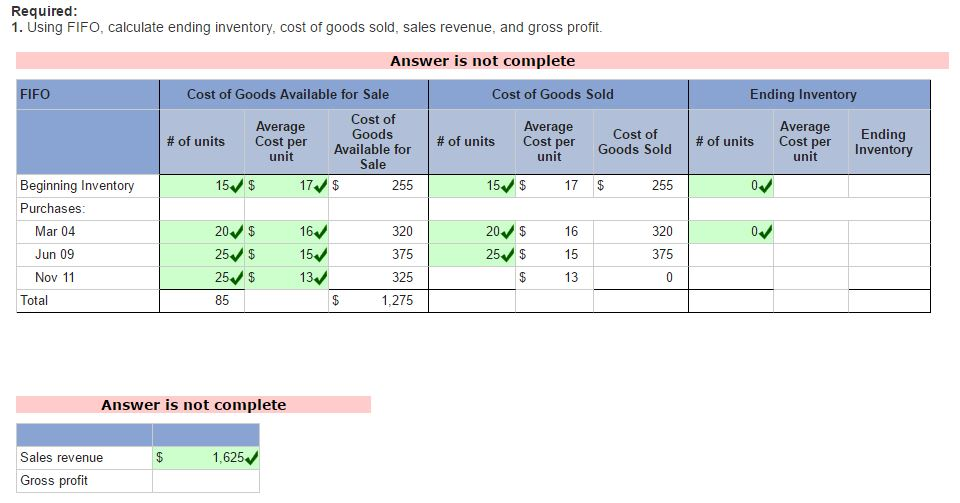
  • The second sale of 180 units consisted of 20 units at $21 per unit and 160 units at $27 per unit for a total second-sale cost of $4,740.
  • Regardless of which cost assumption is chosen, recordinginventory sales using the perpetual method involves recording boththe revenue and the cost from the transaction for each individualsale.
  • The cost of ending inventory is determined by accounting for the acquisition costs of each item in the ending inventory.

As you’ve learned, the perpetual inventory system is updated continuously to reflect the current status of inventory on an ongoing basis. Modern sales activity commonly uses electronic identifiers—such as bar codes and RFID technology—to account for inventory as it is purchased, monitored, and sold. Specific identification inventory methods also commonly use a manual form of the perpetual system. It has grown since the 1970s alongside the developmentof affordable personal computers. Universal product codes, commonlyknown as UPC barcodes, have advanced inventory management for largeand small retail organizations, allowing real-time inventory countsand reorder capability that increased popularity of the perpetualinventory system. These UPC codes identify specific products butare not specific to the particular batch of goods that wereproduced.

2 Calculate the Cost of Goods Sold and Ending Inventory Using the Periodic Method

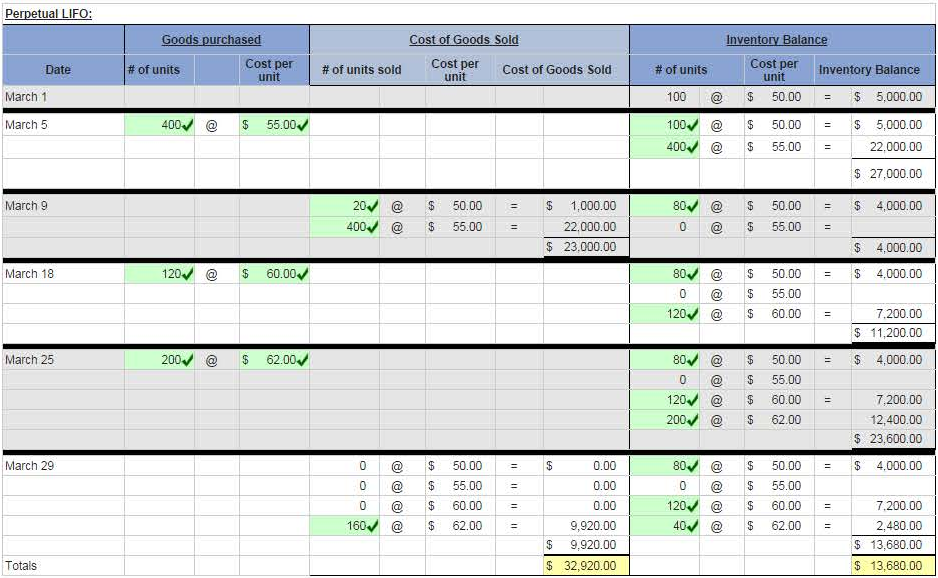
Whenapplying perpetual inventory updating, a second entry would be madeat the same time to record the cost of the item based on the AVGcosting assumptions, which would be shifted from merchandiseinventory (an asset) to cost of goods sold (an expense). The LIFO costing assumption tracks inventory items based on lots of goods that are tracked, in the order that they were acquired, so that when they are sold, the latest acquired items are used to offset the revenue from the sale. The following cost of goods sold, inventory, and gross margin were determined from the previously-stated data, particular to LIFO costing. The FIFO costing assumption tracks inventory items based on segments or lots of goods that are tracked, in the order that they were acquired, so that when they are sold, the earliest acquired items are used to offset the revenue from the sale.

Calculations of Costs of Goods Sold, Ending Inventory, and Gross Margin, Specific Identification

When perpetual methodology is utilized, the cost of goods sold and ending inventory are calculated at the time of each sale rather than at the end of the month. For example, in this case, when the first sale of 150 units is made, inventory will be removed and cost computed as of that date from the beginning inventory. The differences in timing as to when cost of goods sold is calculated can alter the order that costs are sequenced.

compute the cost assigned to ending inventory

Specific Identification Method:

Cost of goods sold was calculated to be $9,360, which should be recorded as an expense. The inventory at period end should be $8,955, requiring an entry to increase merchandise inventory by $5,895. Cost of goods sold was calculated to be $7,200, which should be recorded as an expense. Merchandise inventory, before adjustment, had a balance of $3,150, which was the beginning inventory. The inventory at the end of the period should be $8,895, requiring an entry to increase merchandise inventory by $5,745. Cost of goods sold was calculated to be $7,260, which should be recorded as an expense.

This average cost is then used to assign costs to both the cost of goods sold and the ending inventory. The LIFO method assumes that the inventory items that enter the system last are the first ones to be sold. Consequently, cash vs accrual accounting: whats the difference the costs assigned to the latest units are charged to the cost of goods sold. Under the FIFO method, it is assumed that the inventory items that enter the system first are the first ones to be sold.

It has grown since the 1970s alongside the development of affordable personal computers. Universal product codes, commonly known as UPC barcodes, have advanced inventory management for large and small retail organizations, allowing real-time inventory counts and reorder capability that increased popularity of the perpetual inventory system. These UPC codes identify specific products but are not specific to the particular batch of goods that were produced. Electronic product codes (EPCs) such as radio frequency identifiers (RFIDs) are essentially an evolved version of UPCs in which a chip/identifier is embedded in the EPC code that matches the goods to the actual batch of product that was produced. This more specific information allows better control, greater accountability, increased efficiency, and overall quality monitoring of goods in inventory.

For a firm to calculate the total cost of its ending inventories, it is first necessary to determine the actual quantity of items in the ending inventory and then to attach a price to these items. Figure 10.20 shows the gross margin, resulting from the weighted-average perpetual cost allocations of $7,253. The first step is to figure out how many items were included in COGS and how many are still in inventory at the end of August.

At the time of the second sale of 180 units, the LIFO assumption directs the company to cost out the 180 units from the latest purchased units, which had cost $27 for a total cost on the second sale of $4,860. Thus, after two sales, there remained 30 units of beginning inventory that had cost the company $21 each, plus 45 units of the goods purchased for $27 each. Ending inventory was made up of 30 units at $21 each, 45 units at $27 each, and 210 units at $33 each, for a total LIFO perpetual ending inventory value of $8,775. The specific identification method of cost allocation directlytracks each of the units purchased and costs them out as they aresold. In this demonstration, assume that some sales were made byspecifically tracked goods that are part of a lot, as previouslystated for this method.

Depreciation Accounting Hardest Test! Quiz Attempts: 1301 Trivia & Questions

depreciation quiz

When it comes to choosing a depreciation method, businesses must consider the nature of their assets and the rate at which they expect the asset to decline in value. While both straight-line and double declining understanding online payroll balance depreciation allocate the cost of an asset over its useful life, they do so at different rates. Double declining balance depreciation is a method that allocates the cost of an asset over its useful life.

Depreciation Accounting Hardest Test! Quiz

Straight-line depreciation is the simplest method of all depreciation methods. It is a method of accounting that allocates the cost of an asset over its useful life in equal periods. For example, if a company purchases a machine for $10,000 and estimates its useful life to be 4 years, then the annual depreciation would be $2,500. Straight-line depreciation allocates the cost evenly over the asset’s useful life, while double declining balance depreciation allocates more of the cost in the early years. Declining balance depreciation is one method of calculating the depreciation expense on long term assets such as property, plant, and equipment.

Where should we send your answer?

Although C-corporations are an uncommon real estate structure, it is an entity where Section 179 may be beneficial. With a C-corporation, tax is paid at the entity level; therefore, shareholder level limitations are not a concern. Instead, the focus will shift to minimizing tax liability while not creating a taxable loss.

Are there any special Depreciation rules for taxes?

  • Therefore, it may be years before the investors reap any sort of benefit from a Section 179 deduction.
  • Someone on our team will connect you with a financial professional in our network holding the correct designation and expertise.
  • It is a method of accounting that allocates the cost of an asset over its useful life in equal periods.
  • The articles and research support materials available on this site are educational and are not intended to be investment or tax advice.
  • However, if Section 179 were instead taken, it would be disallowed and carried forward until the property has cumulative income.

Depreciation is the process of allocating the cost of an asset over its useful life. It’s an accounting method used by businesses to record the decreasing value of assets such as property, equipment or vehicles over time. This allocation is done through various methods, including straight-line depreciation, double declining balance depreciation, and others. In this article, we will discuss these methods in detail and compare them to help you understand the differences and similarities. Test your knowledge on straight-line depreciation and double declining balance depreciation methods used for allocating the cost of assets over their useful life. Learn about the differences, similarities, and suitability of these methods in various business scenarios.

The value of an asset after deducting depreciation from the historical  cost is known as :

Each of these models has its own set of steps that should be followed when deciding. Test your knowledge with this multiple choice question (MCQ) test on depreciation. If you can answer every question correctly, it will be excellent preparation for your exams, interviews, and professional work. Test your knowledge of depreciation by answering the 10 short questions given below. We recommend attempting to answer each question yourself before revealing the answer.

Ask a Financial Professional Any Question

In accounting, decision-making is the process of choosing between two or more courses of action to achieve the desired outcome. Factors that should be considered when making decisions include the company’s financial position, Cash Flow, profitability, and business strategy. Accountants use the information to make decisions by analyzing data and trends to make informed decisions to help the company achieve its goals.

Therefore, it may be years before the investors reap any sort of benefit from a Section 179 deduction. Section 179 expense is commonly used in closely held businesses and C-corporations. With a closely held business, it is more likely to know the tax positions of the individual partners and whether the Section 179 deduction is allowable and beneficial for each partner.

depreciation quiz

It is not uncommon in a real estate business for taxable losses to be generated up until the year of sale. However, Section 179 expense cannot be taken in a loss position, and it cannot be used to create a tax loss as well. With partnerships being a flow-through entity, tax is paid at the individual level. While Section 179 is determined at the partnership level, the important consideration is whether it is beneficial at the individual level. Real estate partnerships are often composed of a large syndication, making it nearly impossible to know the benefit at the final tier level.

Best Construction Accounting Software of 2024

best bookkeeping for construction

The whole system has bank integration so that you don’t have to waste time with time-consuming reconciliations. Maintaining a detailed record of all expenses is essential for successful financial management. In construction accounting, every expense, whether large or small, must be recorded accurately to provide a clear picture of your financial health. This helps you monitor project costs, manage your budget effectively, and ensure you have the right information for tax reporting. Construction bookkeeping services can assist in streamlining this process and ensuring that all expenses are properly documented. Construction-specific accounting software is usually just one component of a total ERP (enterprise resource planning) solution.

best bookkeeping for construction

The smart billing solution for smart business owners

  • If you don’t want to make the annual commitment, the cost is $249 per month.
  • They also set new clients up with a call with one of their QuickBooks experts for a free, guided set-up.
  • Accounting software makes this task easy, as it does with all other expense capture and organizing needs.
  • You’ll get a strong sense of how much value you get for each dollar you spend per vendor, empowering you to make smart spending decisions.
  • We’re always impressed with the QuickBooks mobile app every year that we test accounting software; it might be the best accounting mobile app.

It’s smart to always have three to six months’ worth of your average monthly revenue on hand. For example, if you typically bring in $500,000 per month in contracting work, keep $1.5 million to $3 million available in cash. This way, if your firm experiences dry spells or emergencies, you can continue to power the business you’ve spent so much time and labor creating. Accounting software is one of the most important technologies for your construction firm to implement, so it’s worth taking time to find your ideal platform.

Jonas Enterprise

CoConstruct allows for effective communication with your property owners and subcontractors. That’s useful for managing a complex mix of framing, roofing, plumbing, electrical, carpentry, drywall, painting, and other subcontractors and ensuring everyone is on the same page. Integrations include QuickBooks, Square, ClockShark, CompanyCam, Billd, Fundbox, Lendflow, Permits.com, and more. Also integrates with Zapier, which allows you to tie in hundreds of 3rd party apps. Integrations include QuickBooks, Sage, Viewpoint Vista, Yardi, Acumatica, PeopleSoft, Xero, and 400+ other apps.

  • If you don’t have a highly accurate and efficient construction bookkeeping system, the rest of your business will suffer.
  • Examples of common reports you can generate using construction accounting software include standard financial statements like an income statement, balance sheet, and cash flow statement.
  • Specialized accounting software is available to help construction contractors manage their business finances and the various projects that they may be involved in.
  • Prioritize platforms that offer integrations with your key business software or access to an application programming interface for developing custom integrations.
  • Procore is a great choice if you (or your IT team) need to customize your construction reports or project data in a certain way.
  • Setting financial goals and creating a budget that supports business expansion is key to long-term success.

Record Day-to-Day Financial Transactions

best bookkeeping for construction

And if you forget your laptop, no worries — you can borrow someone else’s and log in through the web browser. While office professionals in B2B industries may have the time construction bookkeeping and patience to deal with expansive tech stacks, contractors and construction teams usually don’t. Jason Ding is a seasoned accountant with over 15 years of progressive experience in senior finance and accounting across multiple industries. Jason’s firm, Notion CPA, is an accounting firm with a business-first focus. The firm specializes in preparing personal and corporate taxation while providing fractional CFO work and leading the accounting and finance function for several small-to-medium-sized businesses.

  • If you don’t intend to hire a professional, follow these best practices for construction bookkeeping to keep your financial records updated.
  • Resource management solutions include a labor chart and field productivity data.
  • These experts possess in-depth knowledge and expertise in handling complex financial responsibilities such as job costing, payroll taxes, and reporting.
  • The Advanced plan adds the ability to create accurate estimates and provide full financial transparency.
  • With each new contract comes a new set of expenses and incomes—new inventory to track and manage, new invoices to send and receive, and new accounts to keep organized.
  • As a QuickBooks ProAdvisor, Mark has extensive knowledge of QuickBooks products, allowing him to create valuable content that educates businesses on maximizing the benefits of the software.
  • Users can access its accounting features remotely, including AR and AP, for simple invoicing, progress billing, and payable management.

They’re only required to use the percentage of completion method for construction contracts that extend over two years. Job costing is a method for allocating expenses and revenue to each specific job. Not only will this help you prepare for tax time, but it provides an accurate accounting of profitability for each contract. Your company may manage short- and long-term contracts, often with varying end dates. To stay on top of cash flow and keep your books in check, you will need a flexible yet organized construction accounting system. Award-winning support means talking to a real person for the help and info you need because we provide so much more than just online accounting software for construction professionals.

best bookkeeping for construction

If you’re able to commit to a year contract, the fee goes down to $189 per user. Everyone from administrative https://www.inkl.com/news/the-significance-of-construction-bookkeeping-for-streamlining-projects employees working in the office to construction workers on the jobsite need to be able to understand and use the software. The Data Genie Construction Reports Creator gives you the tools to create your own custom reports and statements. Speaking from experience, I know how disheartening it can be to work with clunky, outdated software. Knowify is a cloud-based tool with a modern interface and extensive functionality. Learn how we stay transparent, read our review methodology, and tell us about any tools we missed.

T-Accounts and Ledgers

balance t account example

The date of each transactionrelated to this account is included, a possible description of thetransaction, and a reference number if available. There are debitand credit columns, storing the financial figures for eachtransaction, and a balance column that keeps a running total of thebalance in the account after every transaction. Recall balance t account example that the general ledger is a record of each account andits balance. Reviewing journal entries individually can be tediousand time consuming. The general ledger is helpful in that a companycan easily extract account and balance information.

What are debits and credits?

I say normal balances because they don’t always have balances on those sides—but they should. For example, if your checking account is in overdraft then you have negative cash, which would show a balance on the right side instead. It basically means you have a cash liability instead of asset, which is not good. It is this simple for cash accounting, but it isn’t for accrual accounting, which you likely use. In accrual accounting, you need to recognize your revenue according to ASC 606, which means you also need to involve a deferred revenue account. Then, the two involved accounts are your cash account and your revenue account.

Posting of Journal Entries to T-accounts

  • For an auditor, they are a checkpoint for ensuring accuracy in the books.
  • The debits are always transferred to the left side and the credits are always transferred to the right side of T-accounts.
  • T-accounts are well-suited for small businesses or simple transactions, but they can become cumbersome for companies with high transaction volumes.
  • Examples include cash, investments, accounts receivable, inventory, supplies, land, buildings, equipment, and vehicles.
  • Ms. Wilson received an invoice on October 31st for $4,000 for October’s rent.
  • They’re super handy for both newbies and seasoned accountants to keep things clear and accurate.

As mentioned in the previous section, an account balance will include the purchases he made and the item he returned. In our next lesson we’re going to continue working with T-accounts and focus on a very important aspect of them – learning how to balance T-accounts. This is the same as the previous transaction, Sales Forecasting just on the opposite side – we enter the transaction on the credit (right) side of the bank T-account. The chart below shows the complete set of T-accounts for the example transactions discussed in this article. This transaction is telling us that what we have “on hand” in our supply closet is $1,250 worth of supplies. We need to reduce that number to reflect the actual value.

  • Each entry lists the accounts affected, the corresponding debit and credit amounts, and the transaction date.
  • If there was a debit of $5,000 and acredit of $3,000 in the Cash account, we would find the differencebetween the two, which is $2,000 (5,000 – 3,000).
  • The mostly adopted approach is to divide assets into current assets and non-current assets.
  • Your truck costs 30,000 dollars and you make a 5,000 dollars down payment.
  • For example, interest earned by a manufacturer on its investments is a nonoperating revenue.
  • Service revenue earned but uncollected (On credit)On May 10th, Company XYZ invoices a client for $300 worth of service, with payment due within 20 days.

Editorial Process

balance t account example

In this setup, you jot down all debit entries on the left and all credit entries on the right. To find the account balance, subtract the total debits from the total credits. A positive result means a debit balance; a negative result means a credit balance.

  • It would require dedicated manpower just for the data entry.
  • As a new business owner, there will be a variety of financial reports and terms that you may not be aware of.
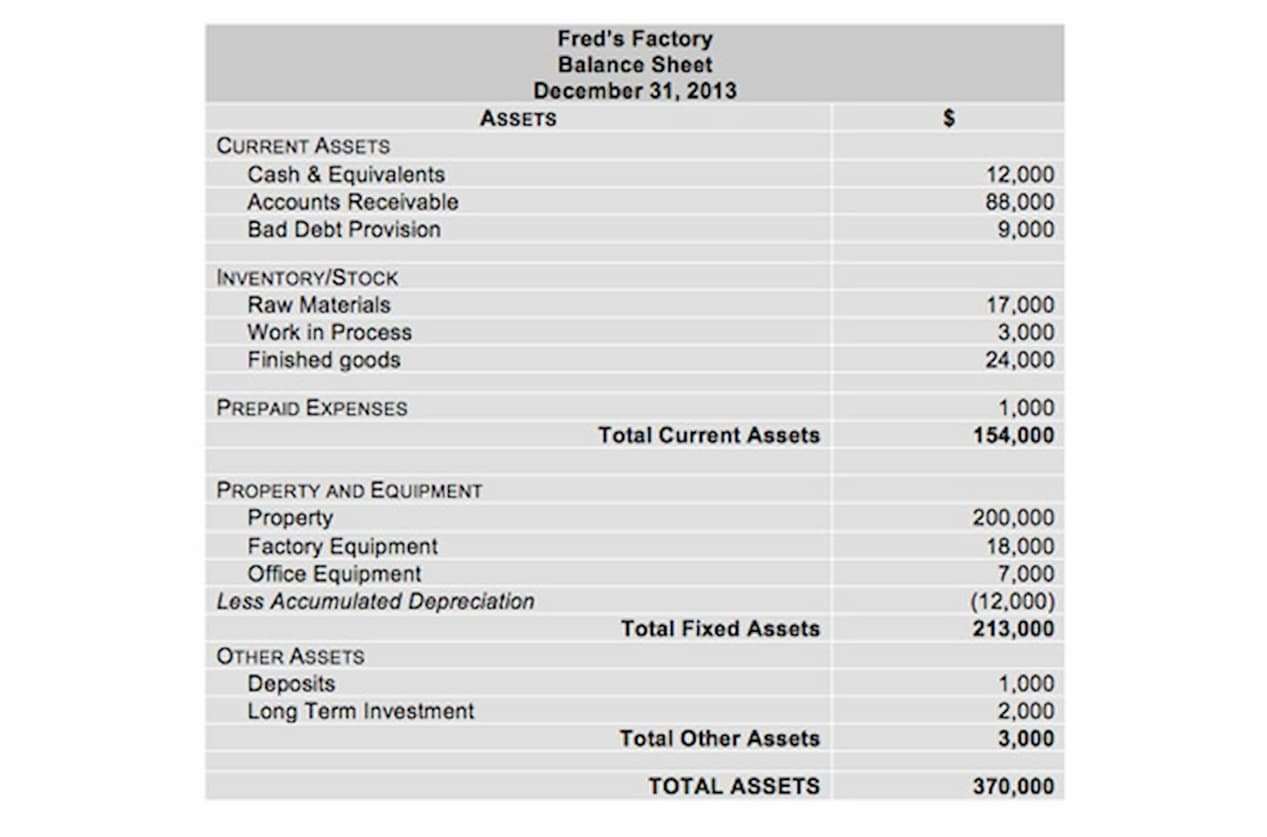
  • The inventory of a manufacturer should report the cost of its raw materials, work-in-process, and finished goods.
  • After reviewing the transactions, prepare the necessary journal entries and post them to the necessary T- Accounts.
  • T-accounts differ from other accounting records in purpose and structure.
  • Since this figure is on the credit side, this $300is subtracted from the previous balance of $24,000 to get a newbalance of $23,700.

#1 – General Ledger

balance t account example

A T-Account is a way of organizing transactions in an easily understood and visually show the increases and decreases in accounts. contribution margin Each business transaction is broken into parts with each part being assigned to an account. The key financial reports, your cash flow, profit & loss and balance sheet are an organised representation of these fundamental accounting records. They are built from the ground up by these debits and credits.

This is a more robust form of accounting that double-checks each transaction and leaves scope for different aspects of business transactions such as buying and selling on credit. A T account is an informal term that refers to financial records that use double-entry bookkeeping. As I owe both this month and last month’s rent, I have to pay £4000. My bank account is credited £4000, whilst the accounts payable account is debited £2000 and rent is debited £2000. Therefore, both debits and credits are equal in this transaction.

T Accounts Examples in Accounting

balance t account example

Determined that the cost of supplies on hand was $1,250; therefore, the cost of supplies used was $2,050. Billed customers for fees earned for managing rental property, $30,800. For the past 52 years, Harold Averkamp (CPA, MBA) hasworked as an accounting supervisor, manager, consultant, university instructor, and innovator in teaching accounting online.